
 Svenska





No products in the cart.
Category
Find your ring size
Choosing the right ring size is essential, especially for an engagement ring, diamond ring, or gold ring that you want to feel comfortable and look elegant. All of our engagement and wedding bands feature a comfort fit, meaning the interior is softly rounded so the ring glides more easily over the knuckle. With our size guide, it’s easy to find the right size at home or to help someone close to you when they’re ordering from A.P. Shaps.
Below, you’ll find a simple table with common measurements. It helps you convert diameter or circumference into a European ring size. Please note that the table shows standard sizes. If your measurement falls between two sizes, we recommend choosing the larger one especially if the ring is wider.
| US | UK | Japan | EU | MM |
|---|
| US | UK | Japan | EU | MM |
|---|---|---|---|---|
| 3 | F | 4 | 44 | 44 |
| 3 1⁄4 | F ½ | 4 ½ | 45 | 45 |
| 3 ¾ | G ½ | 6 | 46 | 46 |
| 4 | H | 7 | 47 | 47 |
| 4 ½ | I | 8 | 48 | 48 |
| 4 ¾ | I ½ | 9 | 49 | 49 |
| 5 ¼ | J ½ | 10 | 50 | 50 |
| 5 ½ | K | 11 | 51 | 51 |
| 6 | L | 12 | 52 | 52 |
| 6 ½ | M | 13 | 53 | 53 |
| 6 ¾ | M ½ | 14 | 54 | 54 |
| 7 ¼ | N ½ | 15 | 55 | 55 |
| 7 ½ | O | 16 | 56 | 56 |
| 8 | P | 17 | 57 | 57 |
| 8 ¼ | P ½ | 18 | 58 | 58 |
| 8 ¾ | Q ½ | 19 | 59 | 59 |
| 9 | R | 20 | 60 | 60 |
| 9 ½ | S | 21 | 61 | 61 |
| 9 ¾ | S ½ | 22 | 62 | 62 |
| 10 ¼ | T ½ | 23 | 63 | 63 |
| 10 ½ | U | 24 | 64 | 64 |
| 11 | V | 25 | 65 | 65 |
| 11 ¼ | V ½ | 26 | 66 | 66 |
| 11 ¾ | W ½ | 27 | 67 | 67 |
| 12 | X | 28 | 68 | 68 |
| 12 ½ | Y | 29 | 69 | 69 |
| 13 | Z | 30 | 70 | 70 |
| 13 ¼ | Z ½ | 31 | 71 | 71 |
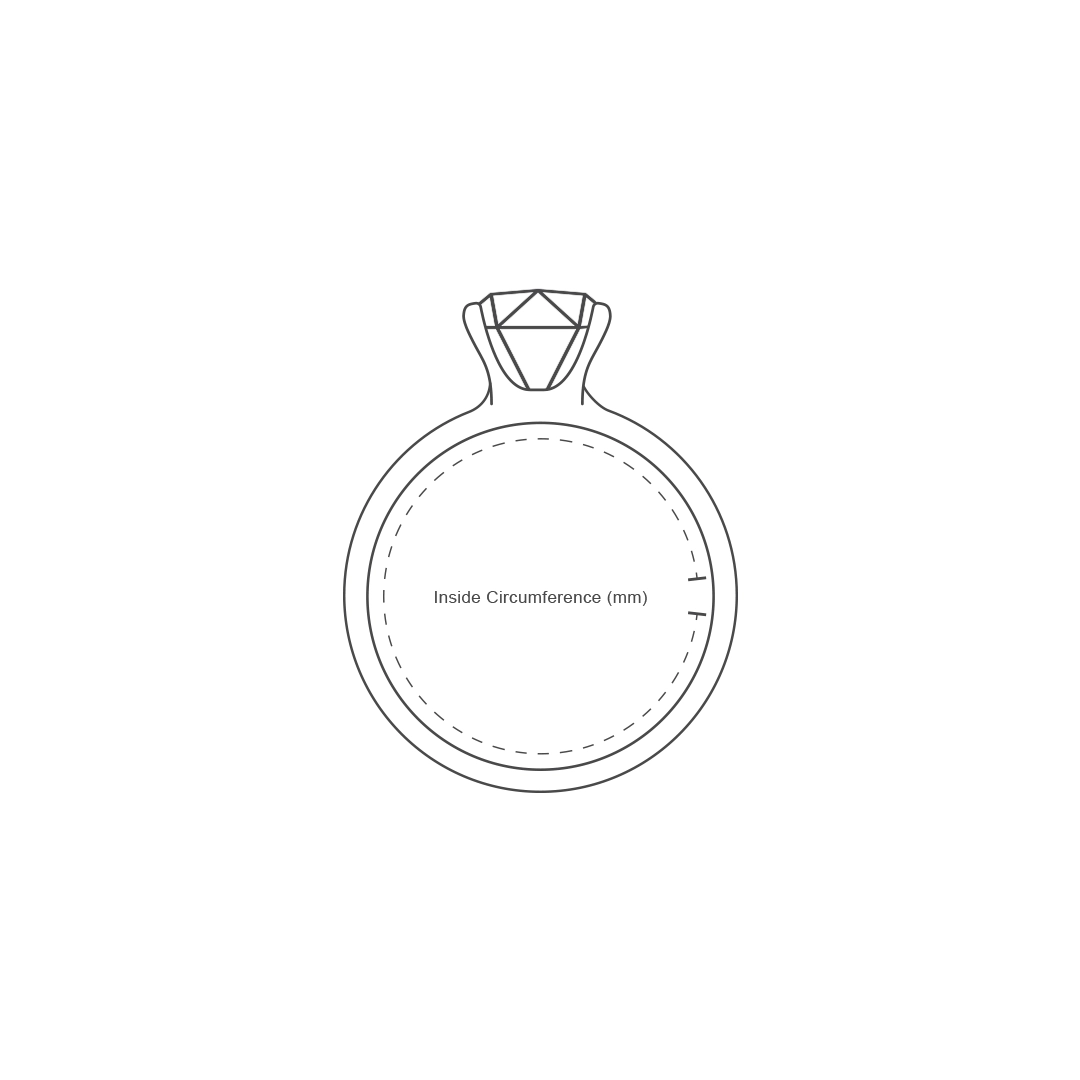
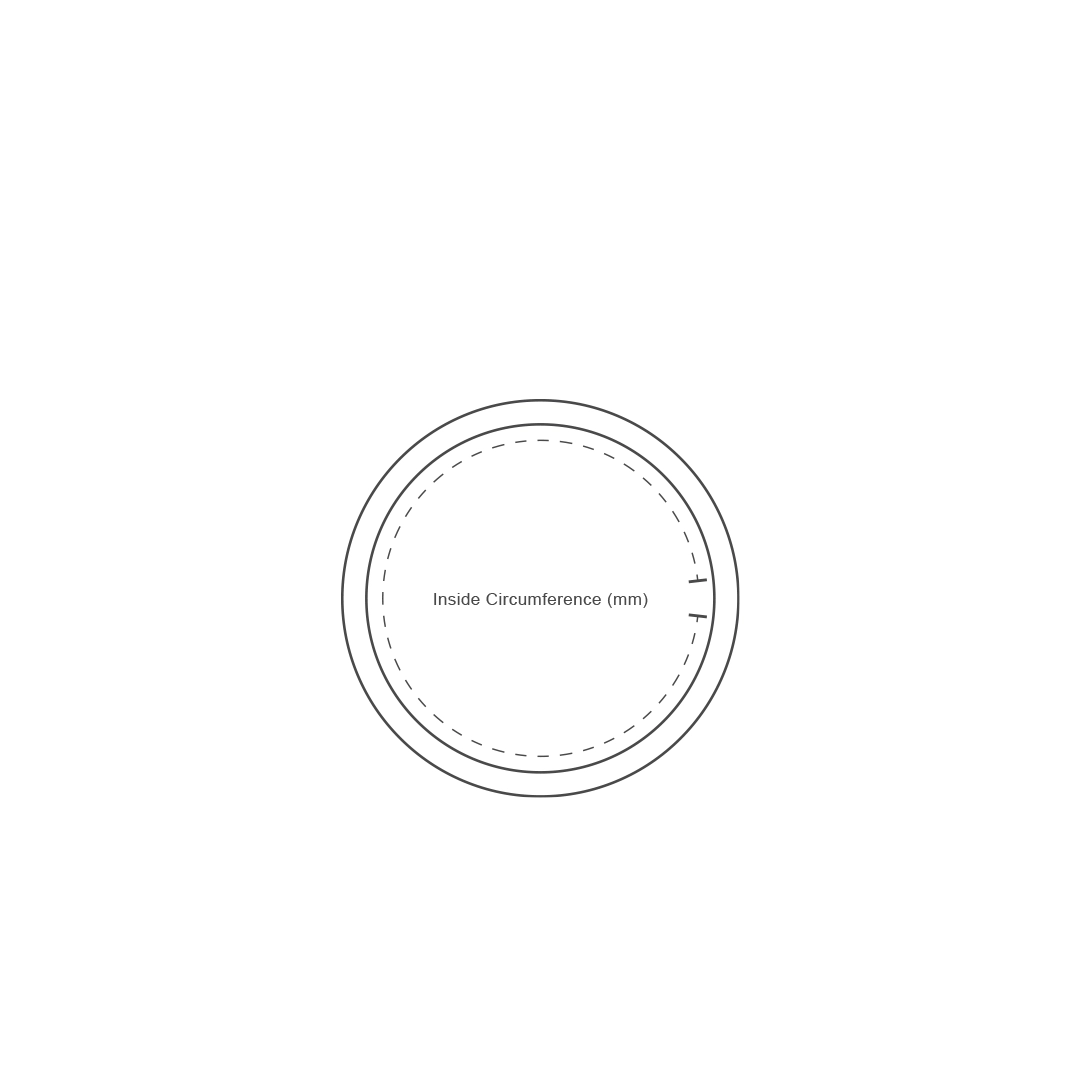
Do you have a ring that fits perfectly on the finger you’re measuring? Measure the inside of the ring—from edge to edge—and note the inner diameter in millimetres. Then compare it with the table below to find the corresponding European ring size (given in circumference; for example, size 52 equals 52 mm in circumference). This is often the most accurate method.
If you don’t have a ring to measure, take a thin strip of paper (or a piece of string) and wrap it around the base of the finger where the ring will sit. Mark where the paper/string meets, then measure the length with a ruler in millimetres. That measurement corresponds to your finger’s circumference. Compare it with the table.
If you’re unsure, it’s better to choose a slightly larger size rather than one that’s too small.
When choosing your ring size, it helps to keep the following in mind:
A wider gold ring or diamond ring can feel tighter than a slim band, so it may be wise to go up by half a size if the ring is wider.
Fingers often swell during the day or in warmer temperatures, which can affect the fit. If possible, measure when your hands are at a normal temperature.
Because an engagement ring or diamond ring is often worn every day—and should feel comfortable for years to come—it’s worth keeping the following in mind:
Try measuring your finger on a few different days to be sure. If you’re between two sizes, choose the larger one.
If the ring has a wider band, it’s better to choose a slightly larger size rather than one that’s too small. This is especially worth considering if you’ll be wearing a wedding band and engagement ring together—two rings naturally sit snug against each other, and you may need to go up by half a size for the most comfortable fit.
With the right size, your new ring will feel both comfortable and timeless. If you’re unsure, we’re happy to help—don’t hesitate to contact us at A.P. Shaps for advice before your purchase. To help you feel confident in your choice, we also offer complimentary ring resizing on rings from A.P. Shaps.
Contact us